

The Philippines creative economy 2026 is no longer just a side story to outsourcing. It is becoming a core engine of growth. Beyond call centers, the country is positioning itself as the backend for the global creator economy. Video editing, animation, game assets, and digital design are now central to this shift.
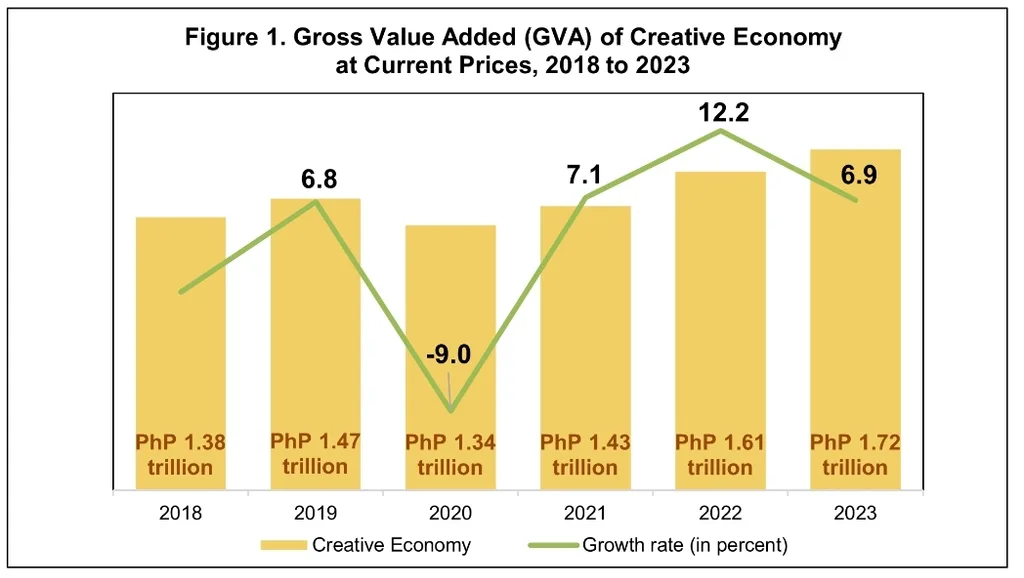
In 2024, the creative economy reached P1.94 trillion, growing 9% year on year and holding a 7.3% share of GDP. This is not niche growth. It shows a structural change in how the Philippines supports global digital work.
Philippines Creative Economy 2026: From Call Centers to Creative Engines
For decades, the Philippines was known for voice support and customer service. That model is changing fast. The data shows a clear move from routine tasks to creative output.
Employment in creative industries reached 7.51 million people in 2024, or 15.4% of total employment. This workforce supports content creation, animation, and digital production rather than scripted calls.
Advertising, artistic, and R&D services alone reached P414.53 billion, or 21.4% of the sector. These are the exact services global creators and gaming firms need.
Read Also: The Philippines BPO Trends 2025 and the New Skill Wave
Philippines Creative Economy 2026 and GameFi Outsourcing
GameFi and digital gaming ecosystems depend on constant content creation. Characters. Environments. Symbols. Visual effects. This is where the Philippines fits naturally.
“Symbols and images” activities made up 33% of the creative economy, valued at P640.29 billion in 2024. These skills align directly with game asset creation and animation outsourcing.
Read Also: Why Philippines Outsourcing Transformation Boosts Competitiveness
Digital interactive goods contributed P398.95 billion, or 20.6% of the creative sector. This growth supports backend work for games, virtual worlds, and creator platforms that require ongoing visual and interactive content.
Within ASEAN, the Philippines ranks high in creative GDP contribution. Strong audiovisual services and R&D capabilities make it a reliable outsourcing base for GameFi companies.
The Key Shift: From Voice Support to Creative Support
The most important change is not size. It is direction.
Creative process outsourcing is now following the same path that BPO once did. Animation, design, and digital production are replacing scripted voice work. The post-pandemic period accelerated this shift.
R&D services dominate creative exports. This shows that global clients are outsourcing skilled creative tasks, not repetitive ones. Demand is rising for thinking, designing, and building—not just answering calls.
The 9% sector growth in 2024 reflects this transition. Creative support is now driving value.
Philippines Creative Economy 2026: Becoming the Creator Economy Backend
The Philippines aims to lead ASEAN’s creative economy by 2030. Audiovisual media and creative services are key pillars of that goal.
With millions already employed and digital goods expanding fast, the country offers scale, skills, and cost efficiency. Global creators and GameFi firms can outsource entire production pipelines, not just fragments. This is why the creative economy matters. It represents a full shift in how the country participates in global value chains.
To better understand opportunities in the Philippines creative economy 2026, companies can explore advisory and market research services from Market Research Philippines by Eurogroup Consulting. With 40 years of distinguished experience, Eurogroup Consulting excels in strategic consulting and deep market research in the Philippines and across the region. Its team provides clear insights and practical support for businesses looking to succeed in this fast-evolving creative landscape.
